


The crop
Palms that fruit all year
Coconut palms flower and fruit all through the year, and farmers harvest mature nuts every month or two. Desiccated coconut is made from these mature nuts, with their firm white kernel.

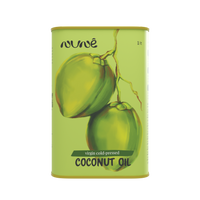
Virgin cold-pressed coconut oil
Single-pressed from fresh desiccated coconut, sourced from farms in Kerala and Tamil Nadu, and sent straight to your kitchen.
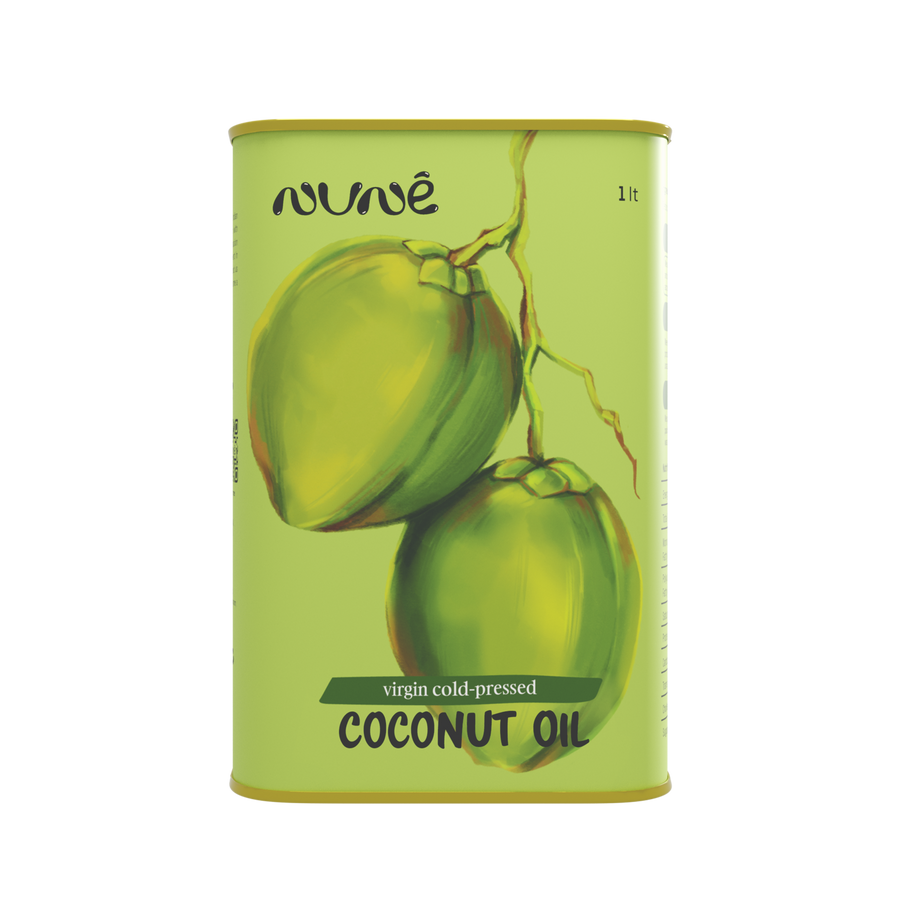


Tax included. Shipping calculated at checkout.
We press our coconut oil from fresh desiccated coconut: the white kernel of mature coconuts from farms in Kerala and Tamil Nadu, pared, shredded and dried to below 6% moisture before it reaches our press. Most coconut oil starts as copra instead, coconut dried for days in the sun or in kilns.
Pressed once and left to settle, it has a clean, fresh coconut aroma for everyday cooking, baking, hair and skin.
What we're cooking
Stock up and save
Discount applies automatically at checkout.
In stock · Ships in 1 to 2 days.
For everyday cooking. Use it for tadkas, stir-fries and Kerala and Tamil dishes like thoran, avial and kootu.
Finish with it raw. A spoonful over avial, puttu or rice, with a few curry leaves, brings out the fresh coconut aroma.
Baking. Melt it and use it in place of butter in cakes and cookies.
Mature coconuts from farms in Kerala and Tamil Nadu are pared and shredded, and the white kernel is dried to below 3% moisture. This desiccated coconut goes through our press a single time. The oil rests for 2–5 days so the fine particles settle, then it's sieve-filtered and bottled. No refining, bleaching or deodorising.
Ingredients: 100% cold-pressed coconut oil from fresh desiccated coconut. Nothing added.
Storage: keep tightly closed, away from direct sunlight. It turns white and solid below about 24°C; stand the bottle in warm water to melt it.
Shipping is calculated at checkout. See our shipping policy and refund policy for details.
Frequently bought together

Choose size
Kerala and Tamil Nadu are among India's biggest coconut-growing states, with palms along the coast and across the plains.
The crop
Coconut palms flower and fruit all through the year, and farmers harvest mature nuts every month or two. Desiccated coconut is made from these mature nuts, with their firm white kernel.

The kernel
To make desiccated coconut, the brown skin is pared off the white kernel, which is shredded and dried quickly to below 6% moisture. Copra, by contrast, is coconut dried for days in the sun or in kilns.

The farmers
For over 25 years, Radhika has tended West Coast Tall coconut palms on her family farm. The coconuts are harvested fully mature and naturally dried before they are pressed.

From farm to press
The desiccated coconut comes to our pressing unit, where it goes through our press a single time. The oil rests for 2–5 days and is sieve-filtered before bottling.
How it compares
Three common ways coconut oil reaches Indian kitchens, side by side.
| Compare |
 Nune single-pressed |
Centrifuged virgin coconut oil
|
Regular coconut oil (copra)
|
|---|---|---|---|
| Made from | Fresh desiccated coconut (white kernel) | Coconut milk from fresh kernel | Copra: coconut dried for days in the sun or in kilns |
| Water in the process | None. The kernel is dry before pressing | Yes. Oil is separated out of coconut milk | None |
| How the oil comes out | Pressed once, then settled naturally | Chilled and spun in a centrifuge | Expeller-pressed from copra |
| Refined, bleached or deodorised | Never | No | Often |
| Counts as virgin coconut oil | Yes | Yes | No |
| Lab report on the page | Yes, see above | Varies by brand | Varies by brand |
Centrifuged and pressed oils are both genuine virgin coconut oil, and both are naturally rich in lauric acid. We chose pressing because keeping water out from the very first step helps the oil stay fresh.
Farm to kitchen
Mature coconuts from farms in the two southern states, sourced fresh.
The white kernel is dried below 3% moisture, then goes through our press a single time.
Rested for 2–5 days, sieve-filtered, lab-tested and packed in glass, tin or PET.
Independently tested
We sent a sample of our coconut oil to Equinox Labs, an independent lab, to test it against FSSAI's standard for coconut oil. Every parameter they tested was within FSSAI's limits.
| Parameter | Nune result | FSSAI limit | What it tells you |
|---|---|---|---|
| Acid value | 0.39 | Max 6.0 | Freshness: the lower it is, the less the oil has broken down |
| Saponification value | 258.31 | Min 250 | Identity: in range for coconut oil |
| Iodine value | 8.39 | 7.5 – 10 | Identity: in range for coconut oil |
| Unsaponifiable matter (g/100 g) | 0.56 | Max 1.0 | Purity: within the limit for coconut oil |
| Refractive index | 1.4487 | 1.4480 – 1.4500 | Identity: in range for coconut oil |
| Polenske value | 14.38 | Min 13.0 | Identity: high values are typical of pure coconut oil |
| Argemone oil | Negative | Negative | Purity: no argemone oil, a toxic adulterant |
Results for one sample, tested 3–9 June 2023 (reports EQNX:001:LAB:F:23:06:00462 A and B). Acid value is a freshness check; the other values confirm the oil is pure coconut oil.
What we're cooking
Three Kerala and Tamil Nadu favourites, made with coconut oil.

Kerala's mixed vegetables in a coconut and curd sauce, finished with raw coconut oil and curry leaves.

A quick Kerala stir-fry of finely chopped cabbage with fresh coconut, tempered in coconut oil.

Tamil coconut rice: cooked rice tossed with fresh coconut, dals and curry leaves in coconut oil.

Why Nune
Five things people ask before switching to Nune.
Because of where it starts. Most coconut oil is pressed from copra, coconut that has been dried for days in the sun or in kilns. Ours is pressed from fresh desiccated coconut, then left to settle and lab-tested. Nothing is added and nothing is refined away.
The coconut goes through our press one time. We bottle the oil from that single pass and don't press the leftover cake again for extra yield.
Desiccated coconut is the white kernel of mature coconuts with the brown skin pared off, shredded and dried to below 3% moisture. It is food-grade coconut, the same kind used in sweets and baking.
Because the kernel is already dry when we press it, water never enters the oil. Moisture is one of the main reasons coconut oil turns sour.
Cook with it every day: tadkas, stir-fries, Kerala and Tamil dishes, and baking in place of butter. Outside the kitchen, warm a little between your palms for a scalp massage before washing, or use it as a fragrance-free body oil.
Pure coconut oil solidifies below about 24°C, so it often turns white in winter or in an air-conditioned room. Stand the bottle in warm water for a few minutes and it melts back to clear liquid. Quality is not affected.
This oil is great for hair. Highly recommended.
Wow excellent product. I really liked it. I am using this product since three years and their quality is consistent. I also use their product.
Fida hogaya mie isku, such a great oil. Loved it
Oil is good and value for money ?? and it is helpful for dietary persons , gives good taste and good for health as well ??
I ordered Nune coconut oil and I am the happiest with the quality of the oil. The fragrance is so fresh. This makes my hair feel so soft and shiny. Recommend nune 5 on 5 to anyone who is looking for a good quality oil.
I rarely drop reviews for products unless they're really good or really bad. And I'm here to say that I love this product! I've been using this brand's cooking oil for over a year and decided to try their new extra virgin coconut oil for hair and skin. Nune never disappoints! The aroma of fresh coconuts is amazing. Totally worth it!Packaging 10/10
Great quality oil. Smells very fresh and pure. Have been using it for skin and hair. It is even good for cooking.
Tried this through reference of a friend, it has a beautiful texture and aroma, skin feels healthy, everyone looking for everyday purposes for wellness and verstality
Value for money product, great packaging and well sealed. Looking forward to using this extensively for the extra hydrating feel with this skin friendly product.
Highly recommended for anyone looking for a pure, natural, and healthy coconut oil option. A great product that delivers both quality and authenticity.
Tried Nune Cold Pressed Oil recently and really liked the quality. Feels fresh, light, and much better compared to regular oils. Will definitely continue using it!
I chose this single-pressed coconut oil specifically for its extraction method and it performs exactly as expected. Unlike refined oils, this extraction avoids excessive heat and chemical processing, which helps retain naturally occurring bioactive compounds. You must buy it.
Bought the product as I had dry skin, really does justice to my skin, non-sticky and I lovee the smell.Been a week since I used this can see my stretch marks have reduced as well. Can go for it if you have the same worries plus it�s cold pressed so good good for everything I use it on my hair too never been smoother
Used it for hair & skin. Like all there other oils this oil too was very good fresh coconut aroma. Must try oil
Love the taste and health aspects, cannot go back to any ordinary oil after this - you can feel the difference in your day to day life! The packaging was so beautiful and robust, glad I got introduced to Nune.
Extent oil
Good
Great for cooking as flavour is not overpowering.. I would recommend for both cooking and skin as it feels very rich.
Good
Good oil, used it for both skin & hair. Oil was lite & smelled like fresh coconut
Very good quality , smells very soothing and great for skin and hair
Quality is good ??
Very pure and the fragrance is also so natural
Using this oil for both skin & hair. Qulaity is very good, Oil feels very fresh & lite. Nice aroma as well.
Good product and quality pure.
Best one
its pure and good
Oil is good but can is inconvenient
Yeah its good for skin and hair. Smells fresh and Virgin pure. Would recommend the 5L tin pack. As for cooking purposes, I seldom use it. Overall, thumbs up.


