


The crop
A winter crop
Mustard is a rabi crop. Farmers sow it after the monsoon harvest, in October and November. By mid-winter the fields are yellow with flowers, and the seed is harvested from February onwards.
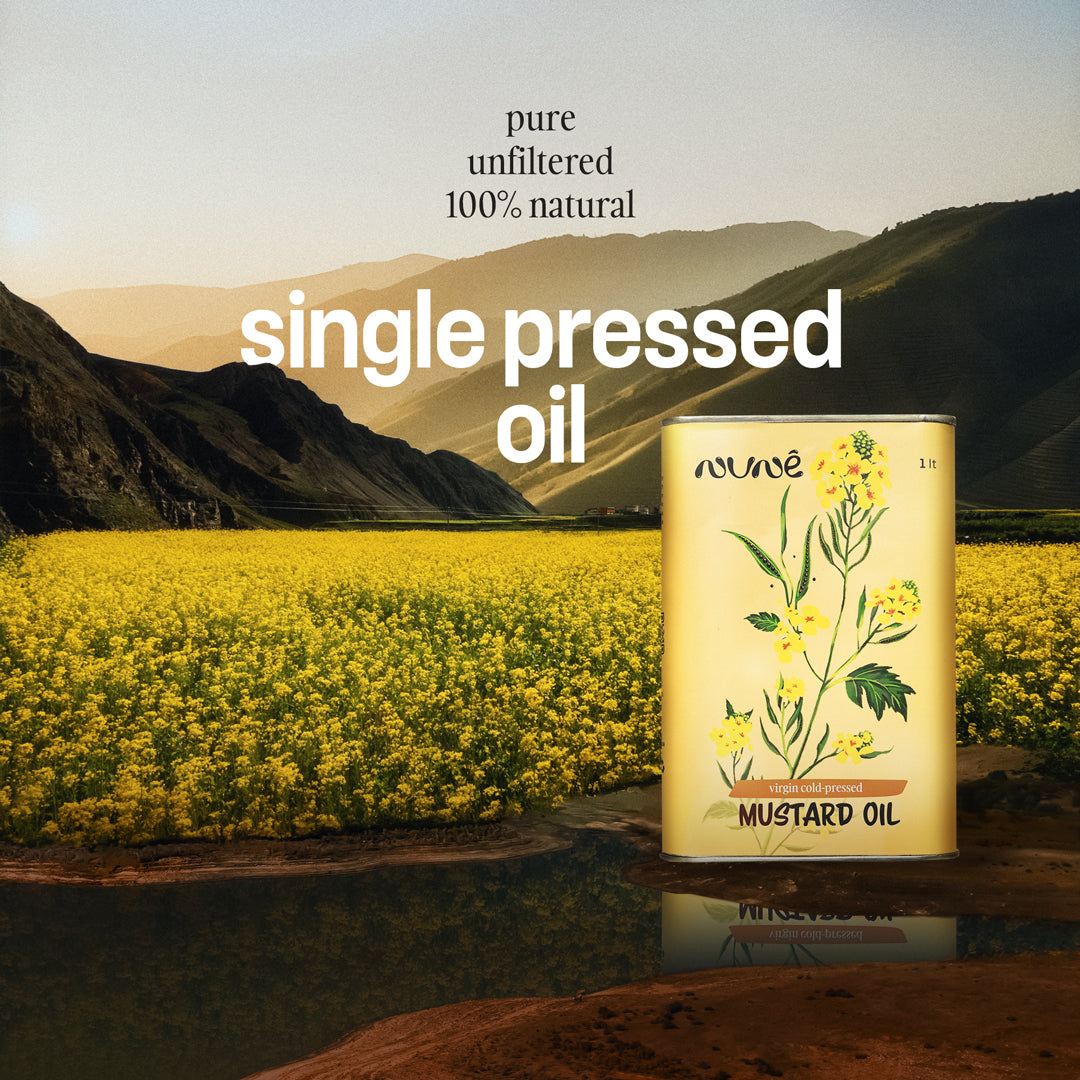
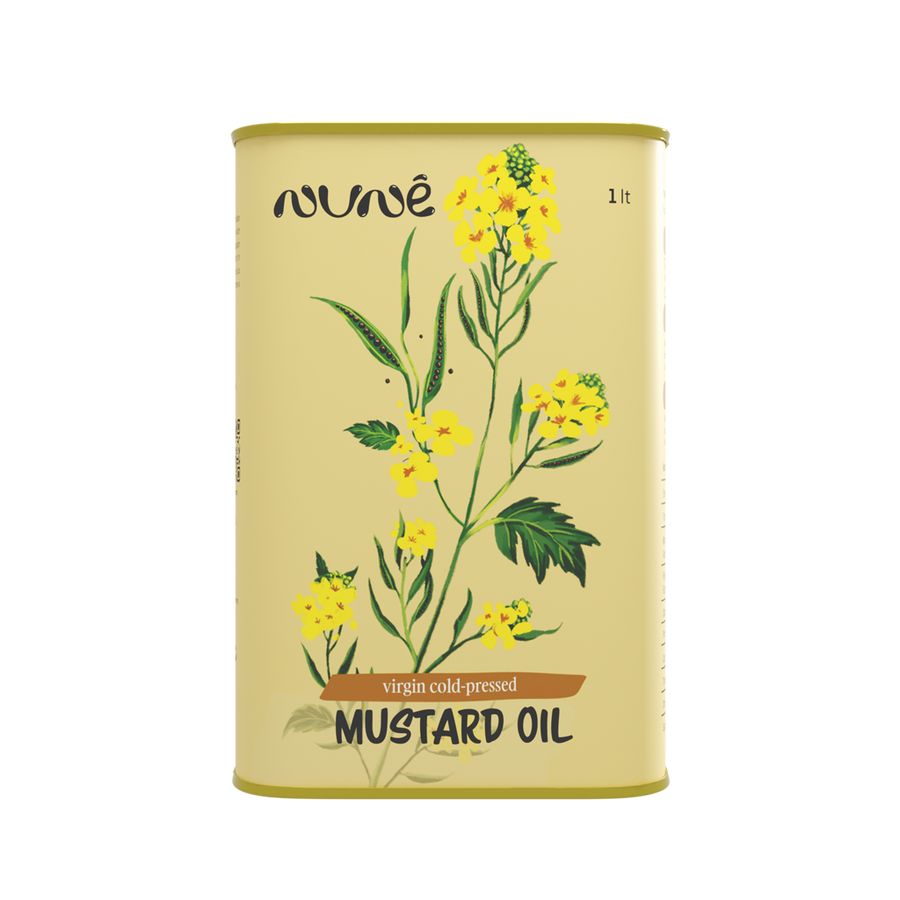
Virgin cold-pressed mustard oil
Single-pressed from mustard seed grown in Rajasthan, with the sharp, pungent aroma that refining takes away.


Tax included. Shipping calculated at checkout.
Our mustard seeds come from Rajasthan, the state that grows more mustard than any other in India. We press the small, dark seeds once, at low temperature, so the oil keeps its golden colour and the sharp, pungent aroma that refining takes away.
It's the oil North Indian kitchens are built on, for tadkas, sabzis, pickles and fish curries.
What we're cooking
Stock up and save
Discount applies automatically at checkout.
In stock · usually ships in 1 to 2 days.
Mellow the bite. For a milder taste, warm the oil until it just starts to haze, then lower the heat for a moment before adding your tadka.
Made for pickles. Mustard oil is the classic oil for North Indian achaar. Heat it, let it cool completely, then pour it over.
Use it raw too. A spoonful in baingan chokha, aloo bharta or jhalmuri gives that sharp mustard kick.
Mustard seeds from farms in Rajasthan are cleaned and pressed once, at low temperature, in our single-press machines. The oil rests for a few days so the fine particles settle, then it's sieve-filtered and bottled. No refining, bleaching, deodorising or blending.
Ingredients: 100% cold-pressed mustard oil. Nothing added.
Allergy: contains mustard.
Storage: keep tightly closed, in a cool, dry place away from direct sunlight.
Shipping is calculated at checkout. See our shipping policy and refund policy for details.
Frequently bought together

Choose size
Rajasthan grows more mustard than any other state in India. Every winter, its fields turn yellow with mustard flowers.
The crop
Mustard is a rabi crop. Farmers sow it after the monsoon harvest, in October and November. By mid-winter the fields are yellow with flowers, and the seed is harvested from February onwards.

The land
Mustard needs little water, which suits Rajasthan's dry winters. The state's mustard belt runs through districts such as Sri Ganganagar, Alwar and Bharatpur, home to India's national mustard research centre.

The farmers
For over 10 years, Sushila has grown mustard on her family farm. Once the golden fields are harvested, the seeds are naturally sun-dried and carefully sorted by hand.

From field to press
The cleaned seeds come to our pressing unit, where we press them once at low temperature, let the oil rest for a few days and sieve-filter it before bottling.
Farm to kitchen
Mustard sown after the monsoon and harvested in late winter, in India's biggest mustard-growing state.
The small, dark seeds go through our press a single time, at low temperature.
Rested for a few days, sieve-filtered and packed in glass, tin or PET. Never blended.
What we're cooking
Three North Indian classics where the sharp taste of mustard oil matters.

Rajasthan's gram flour dumplings, simmered in a tangy, spiced yogurt gravy.

Fire-roasted brinjal mashed with garlic, chilli and raw mustard oil, the classic partner for litti.

A quick winter pickle of carrot, radish and green chilli in mustard oil and crushed mustard seed. Makes about 500 g.
How it compares
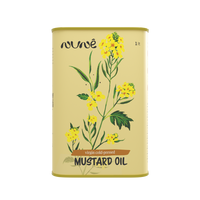
Single-pressed mustard oil next to the refined oils on most shelves.
| Compare |
 Nune single-pressed |
Refined mustard oil
|
Refined cooking oil
|
|---|---|---|---|
| Seeds | Mustard grown in Rajasthan | Rarely stated | Not mustard |
| How the oil comes out | Pressed once at low temperature, then settled | Often solvent-extracted, then refined | Often solvent-extracted, then refined |
| Refined, bleached or deodorised | Never | Yes | Yes |
| Pungency and aroma | Sharp, pungent mustard aroma | Mostly removed | Neutral |
| Added antioxidants | None | May contain permitted antioxidants | May contain permitted antioxidants |
| Growing region on the page | Yes, see above | Rarely | Rarely |
The sharp bite of mustard oil comes from natural compounds released when the seed is crushed. Pressing once and skipping refining keeps it in the bottle.
Why Nune
What people ask before switching to Nune mustard oil.
Mustard seed from Rajasthan, India's biggest mustard-growing state, pressed once at low temperature, then settled and sieve-filtered. No refining, no blending, nothing added.
That sharp, nose-tingling bite comes from natural compounds released when mustard seed is crushed. Refining strips most of it out; pressing once keeps it. For a milder taste, warm the oil until it just starts to haze, then lower the heat before adding your spices.
No. It's 100% mustard oil. In India, blending mustard oil with any other edible oil has been prohibited by FSSAI since 1 October 2020.
Yes. Mustard oil is the classic oil for North Indian achaar, from mango and lime to carrot and chilli. Heat it until it just hazes, let it cool completely before pouring it over the pickle, and always use a clean, dry spoon.
Many families use mustard oil for traditional body and hair massage, especially in winter. It can feel warm on the skin, so do a small patch test first. For babies, check with your paediatrician before use.
We let the oil settle and sieve-filter it instead of refining it, so a few fine particles from the seed can collect at the bottom over time. It's natural; just pour gently.


