Virgin cold-pressed kusuma oil

Light, pure safflower oil. Pressed once.

Single-pressed from native variety safflower seeds, grown by farmers around Zaheerabad in Telangana and in Karnataka.

  • Native variety seeds
  • 18-month shelf life
  • No additives or preservatives
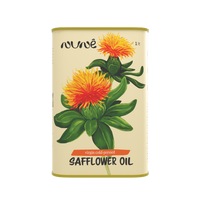
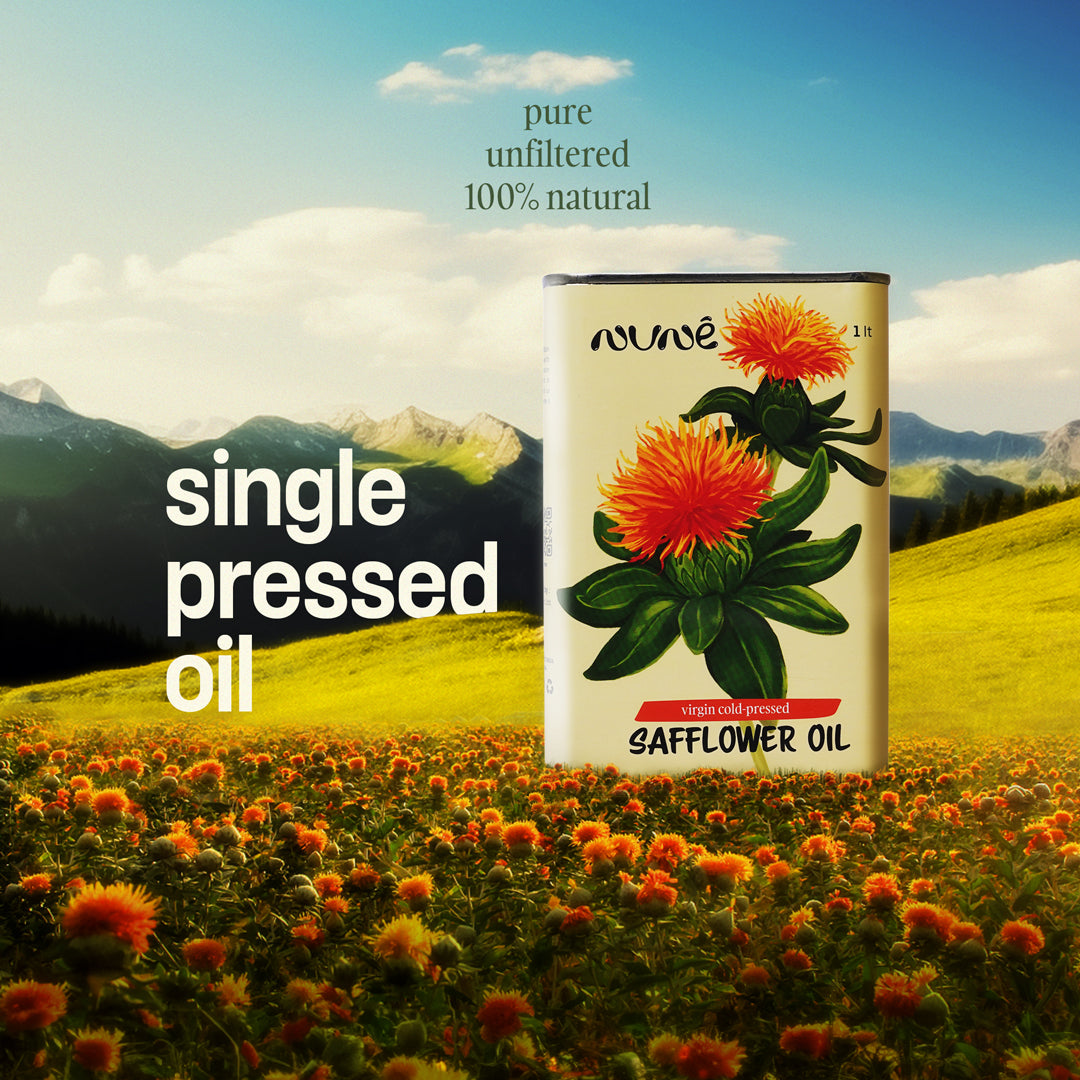
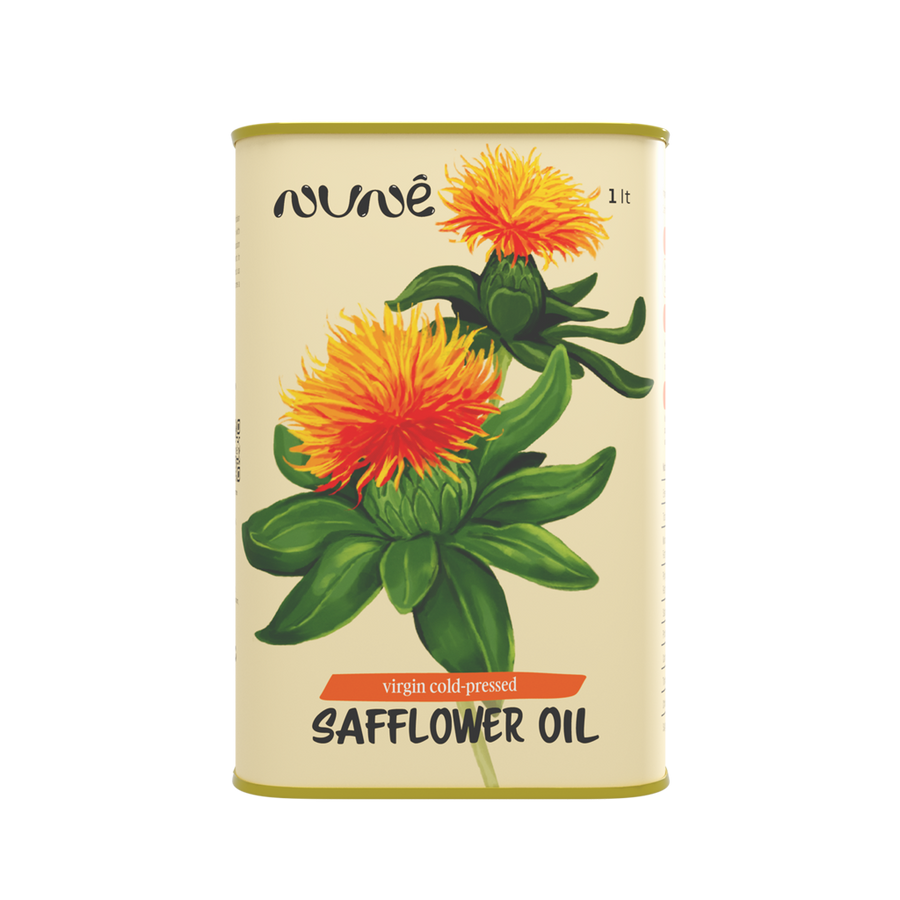
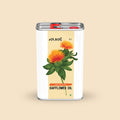
Nune virgin cold-pressed safflower oil tin
Single-pressed
Cold Pressed Safflower Oil ( Kusuma Oil ) 5L

Cold Pressed Safflower Oil (Kusuma Oil) 5L

Rs. 2,299.00 Rs. 3,245.005 Litre Tin

Tax included. Shipping calculated at checkout.

Safflower, kusuma in Telugu, is a hardy winter crop of the Deccan. Our seeds come from farmers around Zaheerabad in Telangana and in Karnataka who still grow native varieties. We press them once, at low temperature, and let the oil settle naturally before bottling.

The result is a light, pale oil with a clean, mild taste for everyday cooking, and the same oil we supply for an ICMR-funded newborn care study.

Size: 5 Litre Tin

Stock up and save

Discount applies automatically at checkout.

In stock · usually ships in 1 to 2 days.

  • Unrefined
  • Nothing added
  • 18-month shelf life
Cooking tips

Everyday cooking at medium heat. Its light, neutral taste suits tadkas, sautéing, shallow frying, dosas and dressings.

Use it fresh. Like other oils rich in polyunsaturated fat, it's best not reheated again and again for deep frying.

Try it raw. The mild taste works in salads like kosambari.

How it's made

Native variety safflower seeds from farmers around Zaheerabad, Telangana, and in Karnataka are cleaned and pressed once, at low temperature, in our single-press machines. The oil rests so the fine particles settle, then it's sieve-filtered and bottled. No refining, bleaching or deodorising.

Ingredients, storage and shelf life

Ingredients: 100% cold-pressed safflower oil from native variety safflower seeds. Nothing added.

Storage: keep the bottle closed, at room temperature, away from direct sunlight and humidity.

Shelf life: 18 months from the date of manufacture, backed by an accelerated shelf-life study. See the results further down this page.

Shipping and returns

Shipping is calculated at checkout. See our shipping policy and refund policy for details.

Frequently bought together

Cold Pressed Groundnut Oil
Cold Pressed Groundnut Oil Rs. 399.00 · 1 Litre (Pet Bottle)
Cold Pressed Sesame Oil ( White Sesame Seeds )
Cold Pressed Sesame Oil ( White Sesame Seeds ) Rs. 599.00 · 1 Litre PET Bottle
Cold Pressed Mustard Oil
Cold Pressed Mustard Oil Rs. 499.00 · 1 Litre PET Bottle
Cold Pressed Coconut Oil
Cold Pressed Coconut Oil Rs. 799.00 · 1 Litre PET Bottle
  • Telangana & Karnataka
  • Native varieties
  • Pressed once
  • 18-month shelf life

Grown in

Zaheerabad, Telangana & Karnataka

Zaheerabad

Map: DataMeet India, CC BY 4.0. Boundaries as per the Survey of India.

Safflower, kusuma in Telugu and kusube in Kannada, has long been grown as a winter crop across the Deccan plateau.

The crop

A winter oilseed

Safflower is a hardy crop of the Deccan. Farmers sow it after the monsoon and it grows through the cooler months on moisture stored in the soil, needing little irrigation. Its bright orange flowers give way to spiny seed heads.

The region

Zaheerabad and Karnataka

Our seeds come from farmers around Zaheerabad, in Telangana's Sangareddy district close to the Karnataka border, and from farmers in Karnataka who still grow native safflower varieties.

The farmers

Laxmibai Jadhav, Zaheerabad

For over two decades, Laxmibai has grown safflower on her family farm in the Deccan. The crop is harvested by hand, naturally dried and carefully sorted before its seeds are pressed.

From field to press

Pressed once

We clean the seeds and press them once at low temperature. The oil rests so the fine particles settle, then it's sieve-filtered and bottled.

6,000 of 100 ml bottles supplied to study hospitals
4,300 very low birth weight babies to be enrolled
6 medical colleges taking part, from Lucknow to Mysuru

Newborn care research

The oil in a national newborn care study

Study under way · 2025–2027

Nune's cold-pressed safflower oil is the oil used in EmollientVLBW, a study funded by the Indian Council of Medical Research (ICMR) and led by the Community Empowerment Lab (CEL), Lucknow.

The study is looking at whether gentle oil massage improves survival and health for very low birth weight babies cared for in hospital newborn units. We pack the oil in 100 ml bottles for the participating hospitals across India.

The study is ongoing and its results are not yet published. For a newborn, especially one born early or small, follow your doctor's advice on oil massage.

Farm to kitchen

From Deccan farms to your kitchen

01

Native seeds from Zaheerabad & Karnataka

Bought directly from farmers who still grow native safflower varieties.

02

Pressed once, at low temperature

The seeds go through our cold press a single time. We bottle the oil from that one pass.

03

Settled, tested, bottled

Rested for 2–5 days, sieve-filtered, lab-tested and packed in glass, tin or PET.

Accelerated shelf-life study

Built to stay fresh for 18 months

Safflower oil is rich in polyunsaturated fat, which makes it more delicate than most oils. So we kept sealed 500 ml packs at 40°C and 75% humidity for six months, conditions that age oil far faster than a kitchen shelf, and tested them along the way. The lab found no significant change from day one and set the oil's shelf life at 18 months from manufacture.

6 November 2025 to 20 May 2026

Acid value after 6 months 1.38Day 0: 0.85 · FSSAI max 6.0
Iodine value after 6 months 146Day 0: 144 · FSSAI range 135–148
Polyunsaturated fat after 6 months 73.75 %Day 0: 74.18%
Rancidity AbsentAt every check, day 0 to month 6
See all results, day 0 and month 6
Parameter After 6 months at 40°C Day 0 FSSAI requirement
Acid value 1.38 0.85 6.0 max
Iodine value 146 144 135 – 148
Saponification value 195 192 186 – 196
Unsaponifiable matter (%) 0.78 0.72 1.0 max
Refractive index at 40°C 1.4682 1.4680 1.4674 – 1.4689
Butyro-refractometer reading at 40°C 63.5 63.2 62.4 – 64.7
Rancidity Absent Absent Must be absent
Argemone oil Negative Negative Must be negative
Mineral oil Absent Absent Must be absent
Polyunsaturated fat, PUFA (%) 73.75 74.18 –
Oleic acid (%) 16.09 15.52 –
Saturated fat (%) 9.49 9.80 –
Trans fat Below 0.01% Below 0.01% –
Hexane (solvent residue) Below 1 mg/kg Below 1 mg/kg –

Acid value rises slowly as any oil ages; after six months at 40°C it was 1.38, far below FSSAI's limit of 6.0. Also tested on day 0: arsenic, cadmium, lead, mercury, tin and aflatoxins were all below the lab's quantification limits.

What we're cooking

Cooking with safflower oil

Everyday Deccan dishes that suit a light, mild oil.

35 minServes 4

Tomato Pappu

The everyday Telangana dal: toor dal cooked with tomatoes and finished with a garlicky tadka.

See the recipe

Ingredients

  • ¾ cup toor dal, rinsed
  • 2 medium tomatoes, chopped
  • 1 small onion, chopped
  • 3 green chillies, slit
  • ¼ tsp turmeric
  • 1 tsp red chilli powder
  • Salt to taste
  • 2 tbsp chopped coriander
  • For the tadka: 2 tbsp Nune safflower oil; 1 tsp mustard seeds; 1 tsp cumin seeds; 2 dried red chillies; 4 garlic cloves, crushed; 1 sprig curry leaves; a pinch of hing

Method

  1. Pressure-cook the dal with 2 cups water and the turmeric for 3–4 whistles, until soft. Mash lightly.
  2. In a pan, cook the tomatoes, onion and green chillies with a splash of water until soft, about 8 minutes.
  3. Add the mashed dal, chilli powder and salt, and simmer for 5 minutes, adding water for a pourable consistency.
  4. For the tadka, warm the oil on medium heat, add the mustard seeds, and when they crackle add the cumin, red chillies, garlic, curry leaves and hing.
  5. Pour the tadka over the dal, scatter the coriander and serve with hot rice.

15 min, plus soakingServes 4

Kosambari

Karnataka's crunchy moong dal and cucumber salad, finished with a light tempering.

See the recipe

Ingredients

  • ½ cup split moong dal, soaked for 2 hours
  • 1 cucumber, finely chopped
  • 1 carrot, grated
  • ¼ cup grated fresh coconut
  • 1 green chilli, finely chopped
  • 2 tbsp chopped coriander
  • Juice of ½ lemon
  • Salt to taste
  • For the tempering: 1 tbsp Nune safflower oil; ½ tsp mustard seeds; a pinch of hing; a few curry leaves

Method

  1. Drain the soaked dal well.
  2. Mix the dal, cucumber, carrot, coconut, green chilli and coriander in a bowl.
  3. Warm the oil on medium heat, add the mustard seeds, and when they crackle add the hing and curry leaves. Pour over the salad.
  4. Add the salt and lemon juice just before serving, so the vegetables stay crisp.

25 minServes 3

Bendakaya Vepudu

A simple Telugu okra stir-fry, cooked on medium heat until tender and lightly crisp.

See the recipe

Ingredients

  • 250 g okra (bhindi), washed and dried completely
  • 2 tbsp Nune safflower oil
  • ½ tsp mustard seeds
  • ½ tsp cumin seeds
  • 1 tsp chana dal
  • 1 tsp urad dal
  • 1 sprig curry leaves
  • ¼ tsp turmeric
  • 1 tsp red chilli powder
  • ½ tsp coriander powder
  • Salt to taste
  • 1 tbsp roasted peanut powder (optional)

Method

  1. Trim the okra and cut it into 1 cm pieces.
  2. Warm the oil on medium heat. Add the mustard seeds, and when they crackle add the cumin, chana dal, urad dal and curry leaves.
  3. Add the okra and turmeric. Cook uncovered, stirring now and then, for 12–15 minutes until tender and lightly crisp.
  4. Add the chilli powder, coriander powder and salt (adding salt at the end keeps okra from turning sticky), and the peanut powder if using. Cook for 2 more minutes.
  5. Serve with rice and pappu.

How it compares

Not all safflower oil is made the same way

Cold-pressed kusuma oil next to the refined oils on most shelves.

Compare
Nune single-pressed
Refined safflower oil
Refined sunflower oil
Seeds Native varieties from Zaheerabad & Karnataka farmers Rarely stated Rarely stated
How the oil comes out Pressed once at low temperature, no solvent Often solvent-extracted, then refined Often solvent-extracted, then refined
Refined, bleached or deodorised Never Yes Yes
Taste and aroma Light, natural seed flavour Neutral, flavour removed Neutral, flavour removed
Added antioxidants None May contain permitted antioxidants May contain permitted antioxidants
Shelf-life study on the page Yes, see above Varies by brand Varies by brand

Refining removes flavour and colour, along with some of the natural vitamin E and other minor compounds from the seed. Cold pressing keeps them in the bottle.

Independently tested

Quality and nutrition results

We also sent samples of our safflower oil to Equinox Labs, an independent lab, for FSSAI quality checks and a nutrition analysis. Every parameter they tested against FSSAI's limits was within them.

Tested by Equinox Labs · March and June 2023

Acid value 0.25FSSAI max 6.0
Polyunsaturated fat per 100 g 81.18 gSaturated fat: 11.15 g
Trans fat per 100 g Below 0.1 gBelow the lab's limit of quantification
Lab's verdict ConformsAll FSSAI parameters tested were within limits
See all tested parameters
Parameter Nune result FSSAI limit What it tells you
Acid value 0.25 Max 6.0 Freshness: the lower it is, the less the oil has broken down
Saponification value 189.56 186 – 196 Identity: in range for safflower oil
Iodine value 136.93 135 – 148 Identity: in range for safflower oil
Unsaponifiable matter (g/100 g) 0.61 Max 1.0 Purity: within the limit for safflower oil
Refractive index 1.4679 1.4674 – 1.4689 Identity: in range for safflower oil
Energy (per 100 g) 899 kcal – Nutrition
Total fat (per 100 g) 99.91 g – Nutrition
Saturated fat (per 100 g) 11.15 g – Nutrition
Monounsaturated fat, MUFA (per 100 g) 7.58 g – Nutrition
Polyunsaturated fat, PUFA (per 100 g) 81.18 g – Nutrition
Trans fat (per 100 g) Below 0.1 g (BLQ) – Nutrition
Cholesterol (per 100 g) Below 1 mg (BLQ) – Nutrition
Protein, carbohydrate and sugar Below quantification limits – Nutrition
Sodium (per 100 g) 0.85 mg – Nutrition

Quality results: one sample tested in June 2023 (report EQNX:001:LAB:F:23:06:00464). Nutrition per 100 g: one sample tested in March 2023 (reports EQNX:001:LAB:F:23:03:03798 A and B). Values vary a little from batch to batch.

Why Nune

Safflower oil, the way it should be made

Six things people ask about our kusuma oil.

01 Why choose Nune safflower oil?

It starts with native variety safflower seeds bought directly from farmers around Zaheerabad, Telangana, and in Karnataka. We press them once at low temperature, let the oil settle naturally and test every batch. Nothing is added and nothing is refined away.

02 What is kusuma oil?

Kusuma is the Telugu name for safflower (Carthamus tinctorius), the thistle-like plant with bright orange flowers that has long been grown across the Deccan. Its seeds give a light, pale oil.

03 Where do the seeds come from?

From farmers around Zaheerabad in Telangana and in Karnataka who still grow native safflower varieties. Buying from them directly helps keep these seeds in the ground.

04 How long does it stay fresh?

Its shelf life is 18 months from the date of manufacture. Safflower oil is rich in polyunsaturated fat, mostly linoleic acid, which makes it more delicate than most oils, so we had this backed by an accelerated shelf-life study: sealed packs were kept at 40°C and 75% humidity for six months, conditions that age oil much faster than a kitchen shelf. The results are further up this page.

Keep the bottle closed, at room temperature, away from direct sunlight and humidity.

05 How do I cook with it?

Its light, neutral taste suits everyday cooking: tadkas, sautéing, shallow frying, dosas and dressings. Like other oils rich in linoleic acid, it is best used fresh rather than reheated again and again for deep frying.

06 Can I use it for baby massage?

Cold-pressed safflower oil was chosen for the ICMR-funded EmollientVLBW newborn study described above, which is still under way. At home, check with your paediatrician before starting oil massage, especially for a baby born early or small.